
About the piece
It is the first of the Deux Arabesques, published in 1891, among Debussy's first piano works. The title recalls interlaced ornamental lines.
The hands pass triplet arpeggios to each other while the melody, often in pairs of notes, creates the typical “2 against 3”.
How to practise it
- Start with the opening arpeggios, hands separately: they must flow smoothly from one hand to the other.
- For the 2 against 3, learn each hand first, then join them slowly, counting where they meet.
- Light pedal, changed often: the music must stay transparent.
- The middle section is calmer: a good place to rest your fingers.
Free sheet music
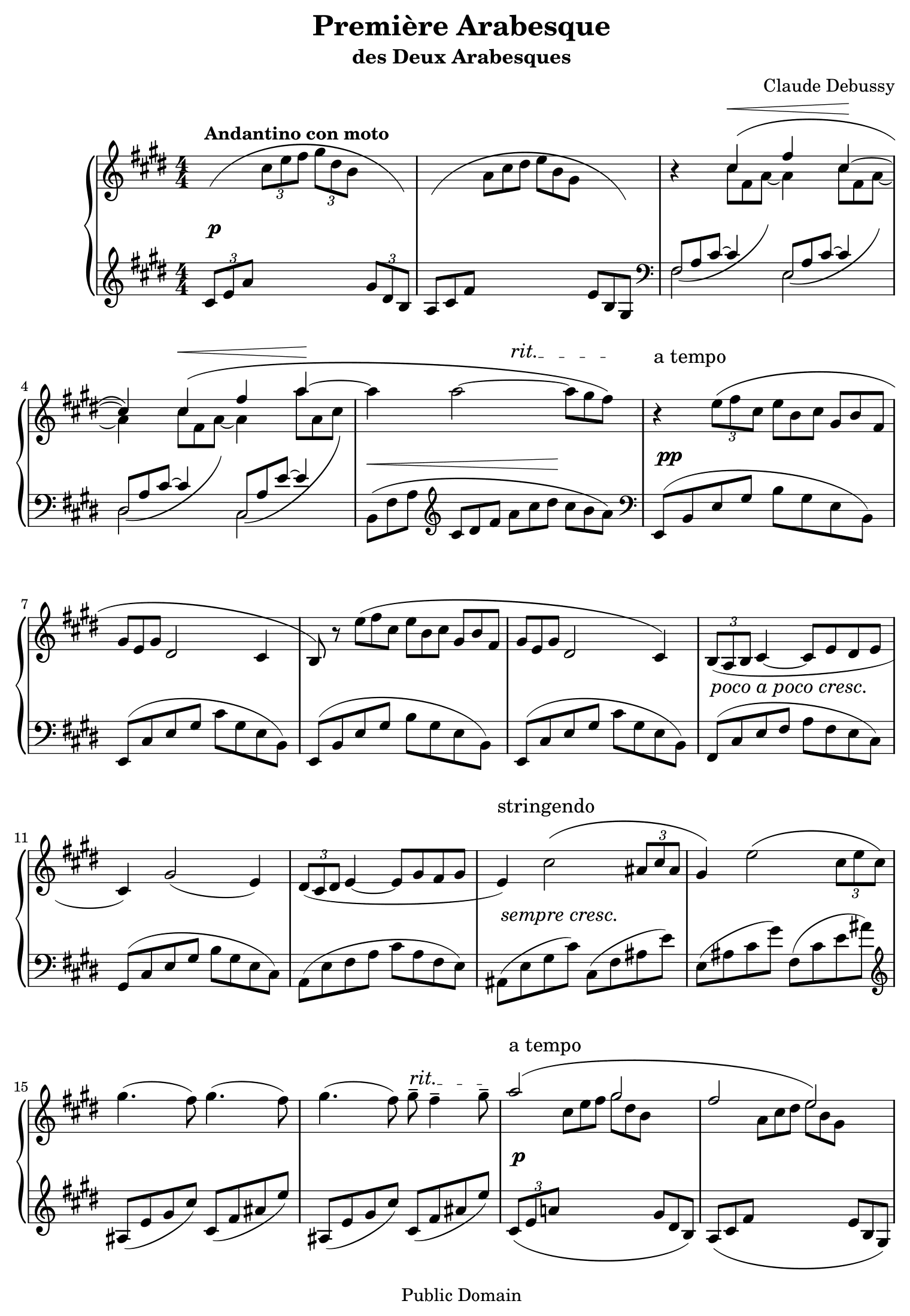
First page. Complete sheet music (PDF) on the Mutopia Project (public domain, edition by Keith OHara); in the Piano Learning app you read it two pages side by side while you play.
Frequently asked questions
Is it easier than Clair de Lune?
Slightly: there are more notes, but the structure is more regular.
Is the sheet music free?
Yes, this Mutopia Project edition is in the public domain.