
About the piece
Erik Satie published the three Gymnopédies in 1888, aged twenty-two. The title recalls the slow dances of ancient Greece; the first one is marked Lent et douloureux, “slow and painful”. In 1897 Claude Debussy orchestrated two of them.
The secret of its sound is the alternation of two soft chords in the left hand, with the melody floating above them, unhurried, in 3/4 time.
How to practise it
- Left hand first, alone. Each bar has a low note on beat one and a chord on beat two: it is a jump. Practise it slowly, watching where the hand lands.
- Then the melody. The right hand plays few, long notes: count them carefully, the piece lives on its pauses.
- Hands together at low speed, with the melody slightly louder than the chords.
- With the sustain pedal, connect the bass note to the chord and change it at the start of each bar.
Free sheet music
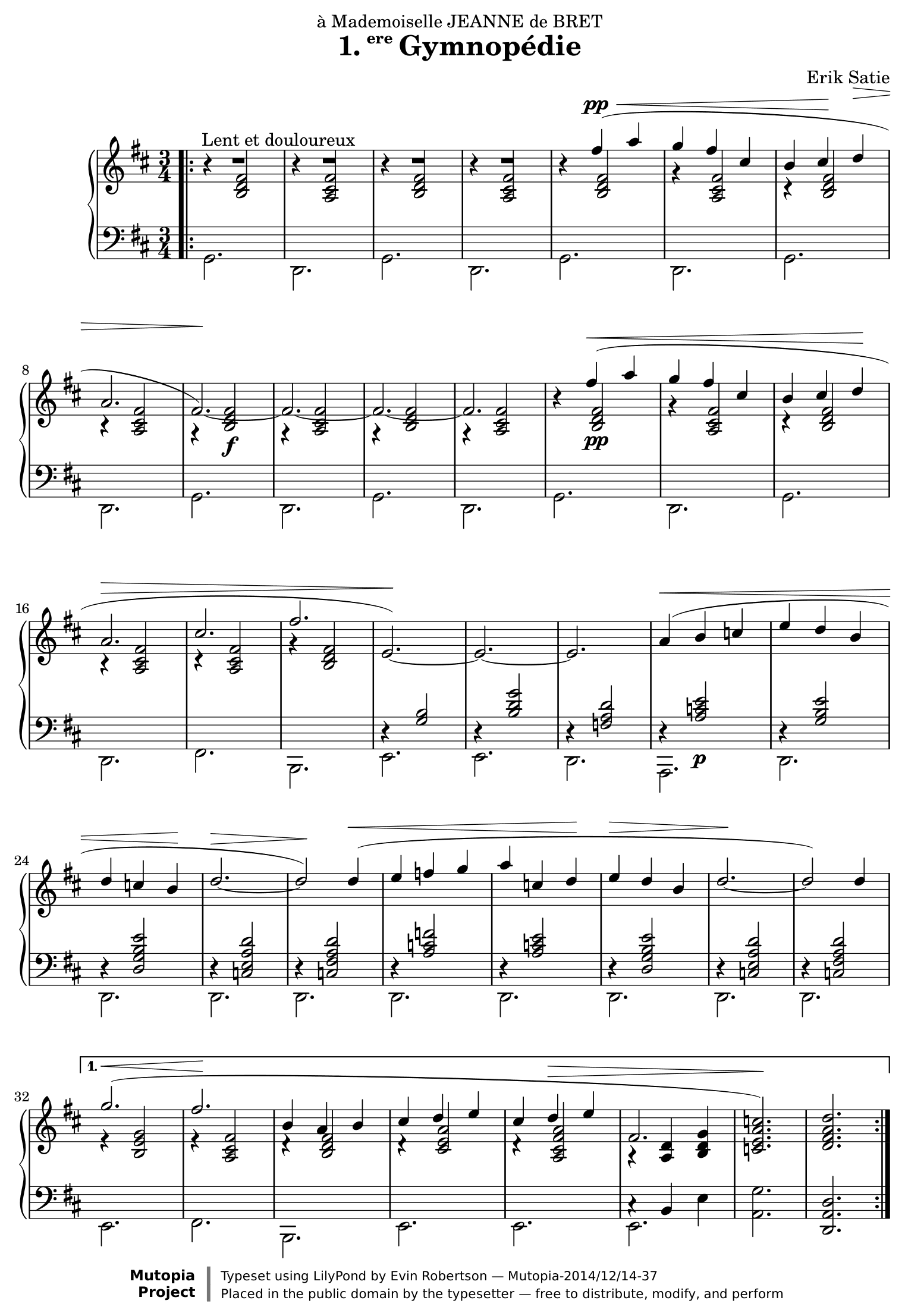
First page. Complete sheet music (PDF) on the Mutopia Project (public domain, edition by Evin Robertson); in the Piano Learning app you read it two pages side by side while you play.
Frequently asked questions
Is it suitable for beginners?
It is one of the most approachable “real” pieces: slow and with few notes. The only real difficulty is the left-hand jump.
Can I play it on a digital keyboard?
Yes. With a sustain pedal plugged in it sounds closer to the original, but it works without one too.