Composers › Claude Debussy
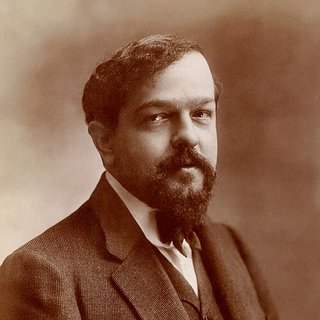
Claude Debussy
The painter of sounds: with new, shaded harmonies he opened the way to 20th-century music.
Life
He was born in Saint-Germain-en-Laye, near Paris. He entered the Paris Conservatoire at ten and in 1884 won the Prix de Rome, the most important prize for young French composers.
He rejected the traditional rules of harmony and looked for new colours, inspired by poetry, painting and even the Javanese music he heard at the Paris World's Fair of 1889.
He wrote the opera Pelléas et Mélisande, the symphonic poem La mer and a great deal of piano music, including the Preludes and the Études. He died in Paris in 1918, during the First World War.
Portrait: Atelier Nadar, public domain, from Wikimedia Commons.

Curiosities
- He is called an “impressionist”, like the painters Monet and Renoir, but he did not like that label.
- Clair de lune is part of the Suite bergamasque and takes its name from a poem by Paul Verlaine.
- The two Arabesques are early works, written between 1888 and 1891: his flowing style can already be heard.
At the piano
- Look for a soft, shaded sound: the fingers sink into the keys without striking them.
- The pedal is part of the colour, but change it when the harmony changes.
- The tempo is flexible: let the music breathe without losing the thread.
Pieces to learn 3 pieces

Learn it note by note with Piano Learning
With “Wait for the note” the piece stops until you play the right key, on your phone or on your own piano (the app listens). Hands separately, speed from 10%, sheet music always in front of you.
Get it free on Google Play Free like La Campanella, the Turkish March, Jingle Bells and Frère Jacques. Hundreds of other pieces with one single purchase, no subscription.